

Canada Falls Into Technical Recession in Q1 2026: First Since 2020
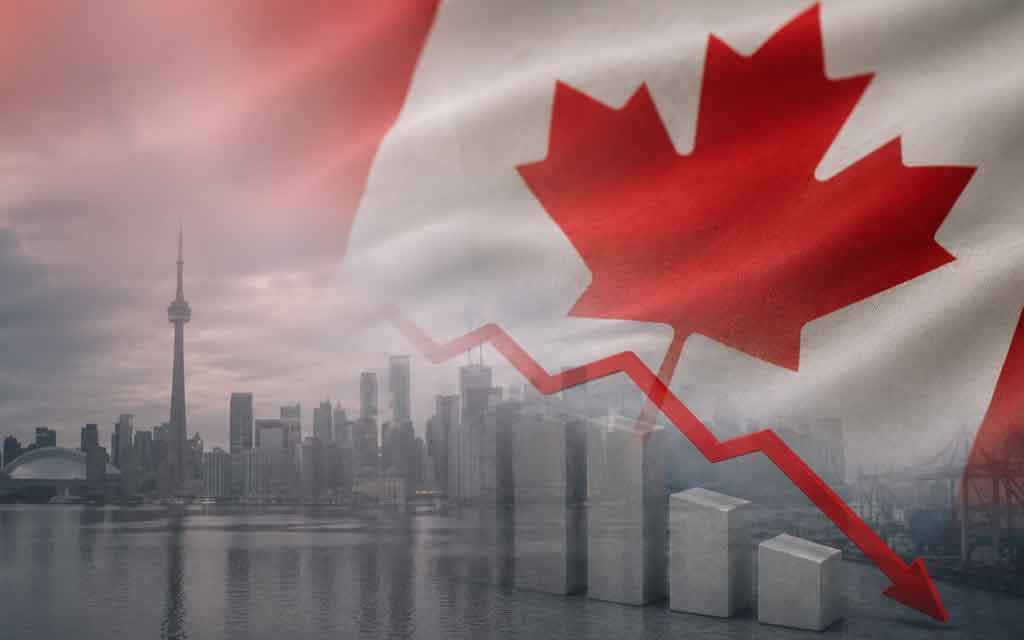
NEXT_PUBLIC_GOOGLE_ADSENSE_ID to enableSurprise GDP contraction pushes Canada into a technical recession amid tariff uncertainty and weak spending.
Published by VFuture Media Team | May 30, 2026
Statistics Canada confirmed on May 29, 2026, that the Canadian economy has slipped into a technical recession — the first since the COVID-19 pandemic in 2020. This development comes as real GDP contracted for the second consecutive quarter on an annualized basis, catching many economists off guard.
What Happened: The Q1 2026 GDP Numbers
- Q1 2026 GDP: Contracted 0.1% on an annualized basis
- Q4 2025 GDP: Revised to a 1.0% contraction (previously reported as 0.6%)
- Quarterly Basis: GDP was flat (0%) in Q1 2026 after declining in Q4 2025
While the contraction is mild, two consecutive quarters of negative annualized growth meet the common definition of a technical recession.
Key Causes Behind Canada’s Technical Recession
- Weak Business and Government Spending — Major drag on growth
- U.S. Tariff Uncertainty — Ongoing trade tensions impacting exports
- Soft Domestic Demand — Households and businesses pulling back
- Resource Sector Weakness — Particularly in March due to resource extraction slowdowns
- Broader Global Pressures — Including Middle East conflicts affecting energy markets
Canada Technical Recession Breakdown Table (2025–2026)
Canada's Recent GDP Performance
- Q4 2025: -1.0% annualized GDP growth, marking a significant economic contraction.
- Q1 2026: -0.1% annualized GDP growth, representing a second consecutive quarter of contraction and meeting the definition of a technical recession.
- April 2026 (Advance Estimate): +0.4% GDP growth expected, signaling a potential economic rebound after two weak quarters.
Economic Context and Implications
- Unemployment: Rising steadily, adding pressure on consumer spending
- Canadian Dollar: Weakened following the data release
- Future Outlook: Economists are divided. Some argue the technical recession may already be ending, with oil and gas activity expected to drive a rebound in Q2 2026.
- Comparison: This is the first technical recession since the sharp downturn at the start of the pandemic in 2020.
Many analysts note that while it meets the technical definition, the shallowness of the contraction (especially on a quarterly basis) may prevent it from being labeled a full recession by the National Bureau of Economic Research (NBER) standard.
What This Means for Canadians and Businesses in 2026
- Job Market: Increased risk of layoffs in vulnerable sectors
- Interest Rates: May influence Bank of Canada decisions on rate cuts
- Investment Climate: Caution among businesses due to trade uncertainty
- Opportunities: Sectors like energy, critical minerals, and AI could still see growth despite the slowdown
Prime Minister Mark Carney has been actively engaging with U.S. leaders to strengthen trade ties in energy, autos, and critical minerals amid these challenges.
Why This Recession Feels Different
Unlike previous downturns driven by a single shock, this technical recession stems from a combination of persistent trade tensions, post-pandemic adjustments, and cautious domestic spending. However, rising commodity prices and potential USMCA renegotiations could provide a faster recovery path than many expect.
Final Thoughts from VFuture Media
Canada’s entry into a technical recession in May 2026 highlights the fragility of the current economic environment, especially with heavy reliance on U.S. trade. While the contraction is mild, it serves as a wake-up call for diversification and resilience in key sectors like AI, green tech, and advanced manufacturing.
The coming quarters will be critical in determining whether this is a short technical dip or the start of a more prolonged slowdown.
Stay informed on global economic shifts. Subscribe to VFuture Media for in-depth analysis on recessions, AI opportunities, tech investments, and future-forward business strategies.
How do you think this technical recession will affect Canada’s economy in the rest of 2026? Share your thoughts in the comments below.
NEXT_PUBLIC_GOOGLE_ADSENSE_ID to enable

