
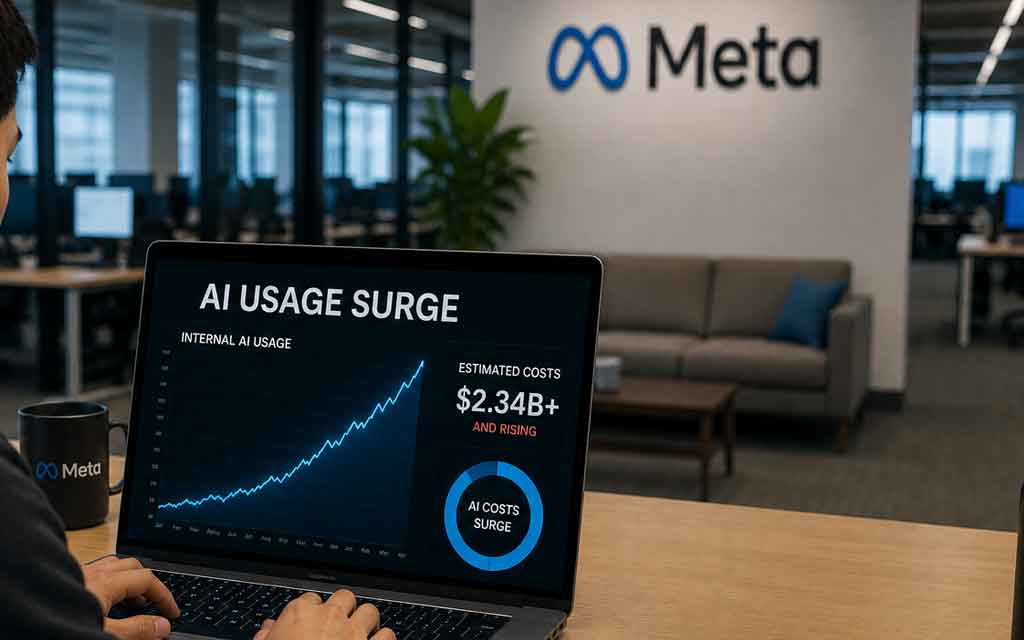
In a notable reversal, Meta is tightening the reins on how its employees use artificial intelligence tools after discovering that internal AI consumption is becoming extraordinarily expensive.
According to a memo sent to approximately 6,000 employees earlier this week (reported by The Information), the company plans to introduce spending controls, budgets, and hard usage limits on AI tools. The move comes as Meta projects that employee-driven AI usage alone could cost the company billions of dollars in 2026.
Why Meta Is Acting Now
Meta had previously been aggressively encouraging employees to adopt AI tools for coding, research, content creation, and daily workflows. The company even began factoring “AI-driven impact” into performance reviews.
However, usage exploded faster than expected. One internal data point highlighted in reporting: employees consumed over 60 trillion tokens in a single 30-day period earlier this year.
This uncontrolled growth in token consumption (the basic unit of cost for most large language models) has turned internal AI usage into a significant and rapidly growing expense line — separate from Meta’s already massive infrastructure investments in data centers and model training.
What Changes Are Coming
According to the internal memo and subsequent reporting:
- Real-time tracking of AI resource consumption across teams
- Introduction of individual and team-level budgets for AI usage
- Hard caps and limits on token consumption for employees
- Greater visibility tools so managers can monitor and control spending
- Strong encouragement to use MetaCode, Meta’s internal coding assistant, instead of more expensive third-party AI tools
The company expects to roll out these controls and monitoring tools in the coming weeks, with more structured allocation systems planned for 2027.
The Bigger Picture: AI’s Hidden Cost Problem
Meta’s move is part of a growing trend among major technology companies:
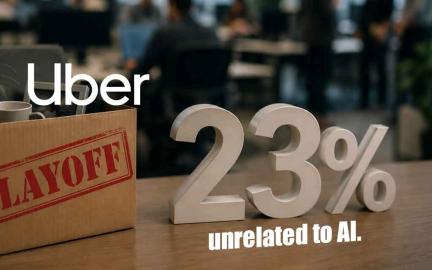
- Microsoft and Uber have also reportedly faced unexpectedly high AI bills from employee usage.
- Many organizations initially viewed generative AI as a way to boost productivity at low marginal cost. In practice, heavy usage — especially for coding assistance, research, and content generation — can lead to massive token consumption.
This creates a new management challenge: How do you encourage AI adoption for productivity gains while preventing runaway costs?
Meta’s response — moving from “use AI as much as possible” to “use it efficiently and within limits” — reflects the maturing economics of generative AI inside large enterprises.
Context Within Meta’s AI Strategy
This cost-control effort comes alongside Meta’s broader, multi-hundred-billion-dollar bet on AI:
- Massive investments in data center infrastructure (projected spending in the $125–145 billion range for 2026)
- Development of its own large language models (Llama series)
- Continued focus on AI across its social platforms (Instagram, Facebook, WhatsApp)
The company appears to be trying to capture the productivity benefits of AI while keeping internal operational costs under tighter control — a balancing act many large organizations are now facing.
What This Means for the Industry
Meta’s decision sends a clear signal:
- Unrestricted employee AI usage is not free — token costs add up quickly at scale.
- In-house tools (like MetaCode) will likely see increased adoption as companies seek cheaper, more controllable alternatives to external AI providers.
- Governance and monitoring of AI usage will become a standard part of enterprise AI strategy in 2026 and beyond.
- The era of “AI everything, everywhere, all at once” without cost discipline is coming to an end.
For employees, it also marks a cultural shift. After months of pressure to demonstrate heavy AI usage, many are now being asked to be more judicious and cost-conscious in how they apply these tools.
Key Takeaways
- Meta is introducing token usage limits and spending controls for employees due to AI costs projected in the billions for 2026.
- The company is steering employees toward its internal MetaCode tool.
- This follows a period of aggressive internal AI adoption and performance metrics tied to AI usage.
- Similar cost pressures are being reported at other major tech firms.
This development highlights one of the most important — and under-discussed — challenges of the current AI boom: turning AI from an exciting productivity tool into a sustainably managed corporate resource.
As more companies move from experimentation to scaled deployment, expect many more organizations to implement the kind of usage governance Meta is rolling out now.



Leave a Comment