
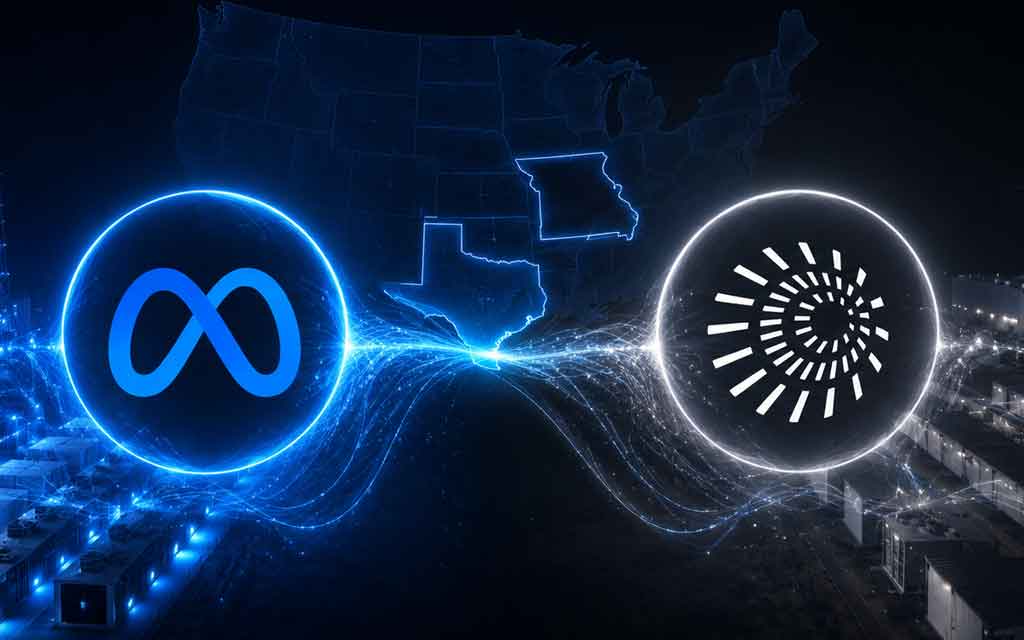
Meta Platforms has signed new AI computing deals with Crusoe for approximately 1.6 gigawatts of capacity across data centers in Childress, Texas, and Warrenton, Missouri. Discover how this massive infrastructure expansion supports Meta’s AI ambitions amid intense competition and power challenges.
Meta is doubling down on AI infrastructure with fresh deals that will deliver roughly 1.6 gigawatts of computing power from Crusoe-operated data centers. The agreements cover planned campuses in Childress, Texas, and Warrenton, Missouri, giving Meta critical capacity to train and run ever-larger AI models as it competes head-to-head with OpenAI, Google, and other frontier labs.
This move highlights a defining trend in 2026: power and data center capacity have become the most important strategic resources in the AI race.
Meta’s Relentless Push to Scale AI Infrastructure
Meta Platforms (formerly Facebook) has made no secret of its massive AI ambitions. The company is investing hundreds of billions of dollars in AI research, data centers, and custom silicon. Its Llama family of open-source models has already reshaped the industry, and Meta continues to push for larger, more capable systems.
To support this growth, Meta needs enormous amounts of specialized computing power — primarily clusters of high-end GPUs and associated infrastructure. While the company builds many of its own data centers, it has increasingly turned to specialized providers like Crusoe, CoreWeave, and others to accelerate capacity and manage power constraints.
The new Crusoe agreements add meaningful scale at a time when securing reliable, large-scale power is one of the biggest bottlenecks in AI development.
Details of the Meta-Crusoe Deals
According to Bloomberg News and Reuters reporting:
- Meta is under contract to purchase computing capacity from two Crusoe data center campuses.
- Locations: Childress, Texas (the majority of the capacity) and Warrenton, Missouri.
- Combined capacity: Approximately 1.6 gigawatts of AI compute.
- The sites are not yet operational. Warrenton received approval in January 2026, with construction slated to begin in 2027. The Texas site is expected to come online earlier.
One gigawatt of data center capacity is enough to power roughly 750,000 average U.S. homes — illustrating the sheer scale of energy required for frontier AI training and inference.
Who Is Crusoe and Why Meta Chose Them
Crusoe is a data center developer known for innovative, energy-efficient designs. The company specializes in building facilities that can utilize stranded or flared natural gas, renewables, and flexible power sources — helping reduce waste and improve economics in regions with abundant but underutilized energy.
This approach is particularly attractive for AI workloads, which are extremely power-hungry and sensitive to both cost and availability of electricity. Crusoe’s model allows faster deployment in locations where traditional grid connections would take years or face significant delays.
Meta’s decision to work with Crusoe reflects a broader industry shift toward diversified, flexible power strategies rather than relying solely on traditional utility-scale builds.
Power Is the New Bottleneck in the AI Arms Race
The Meta-Crusoe deal comes amid growing recognition that energy infrastructure is now as critical to AI progress as chips or algorithms.
Key industry dynamics include:
- Explosive growth in AI training and inference demand.
- Grid interconnection queues stretching years in many U.S. regions.
- Rising scrutiny over the environmental and community impact of massive data center builds.
- Tech companies signing direct deals with power producers and innovative developers to bypass traditional utility timelines.
Meta is far from alone. Other major players are also racing to lock in capacity through similar partnerships. The 1.6GW figure is substantial on its own, but it represents just one piece of Meta’s much larger, multi-year infrastructure buildout.
What This Means for Meta’s AI Future
This additional capacity will support several strategic priorities for Meta:
- Training larger Llama models — Future versions will require significantly more compute than current generations.
- Scaling inference across Meta’s consumer products (Instagram, Facebook, WhatsApp, Threads) as AI features become ubiquitous.
- Reducing reliance on any single provider and improving resilience.
- Geographic diversification of infrastructure (Texas and Missouri add important redundancy and regional economic benefits).
The deals also signal confidence in Crusoe’s ability to deliver on time and at competitive economics — an important validation for the data center developer.
Challenges and Realistic Timelines
It’s important to note that these are forward-looking agreements. Neither campus is currently operational, and full capacity will likely come online in phases over the next several years. Construction, permitting, equipment procurement (especially GPUs), and grid connections all take time.
The AI industry has seen ambitious timelines slip before due to power availability, supply chain issues, and regulatory hurdles. Meta and Crusoe will need to execute flawlessly to realize the full 1.6GW benefit on schedule.
Broader Implications for U.S. AI Leadership
Deals like this reinforce America’s position as the global leader in AI infrastructure development. The combination of:
- Abundant land and energy resources in states like Texas
- Innovative developers such as Crusoe
- Massive corporate capital deployment from Meta, Microsoft, Amazon, Google, and others
…creates a powerful ecosystem that is difficult for other nations to replicate quickly.
At the same time, it raises important policy questions around energy permitting reform, transmission buildout, and balancing AI growth with grid reliability and environmental goals.
The Bottom Line
Meta’s new agreements with Crusoe represent another major step in the company’s aggressive AI infrastructure expansion. The 1.6GW of capacity across Texas and Missouri will provide meaningful additional firepower for training and running advanced AI systems in the years ahead.
As the AI race intensifies, access to reliable, large-scale computing power — and the electricity to run it — has become one of the clearest differentiators between leaders and followers. Meta is clearly determined to stay in the front pack.
For now, the industry will be watching closely to see how quickly these new Crusoe campuses come online and how Meta puts the additional capacity to use in its next generation of AI models and products.



Leave a Comment