
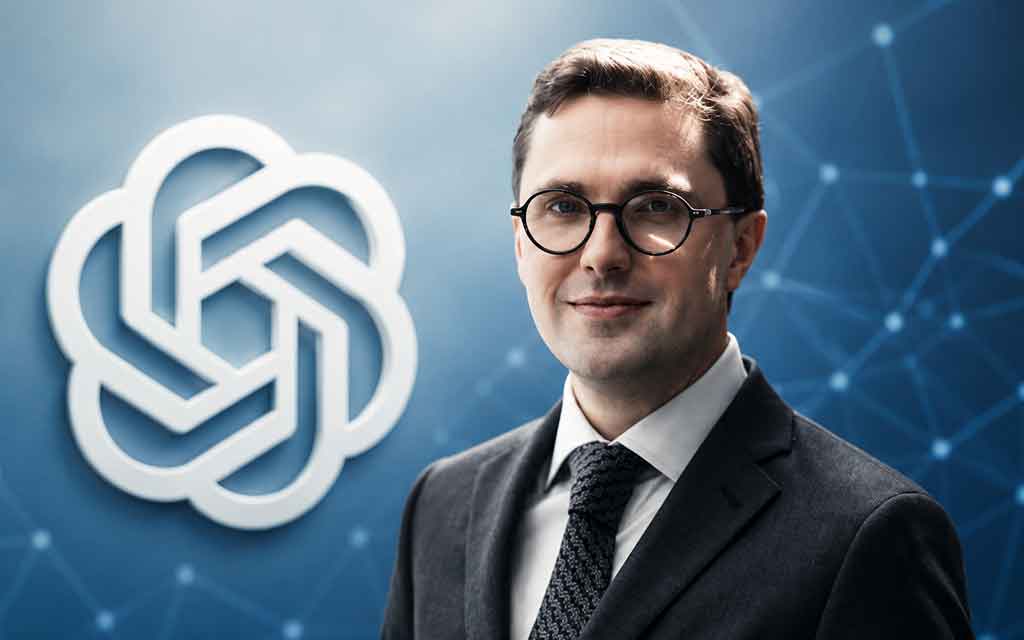
OpenAI is making another high-profile policy hire as it prepares for its anticipated IPO.
Dean Ball, who served as a senior AI policy adviser in the Trump White House and helped draft America’s AI Action Plan, will join OpenAI on July 6, 2026, as head of a new team called Strategic Futures.
According to reports from Politico and Axios, Ball will report directly to Chief Strategy Officer Jason Kwon and will focus on helping OpenAI’s leadership shape its approach to frontier AI policy, internal governance, and engagement with government — particularly the U.S. federal government.
Ball confirmed the move on X, stating that the new team’s mandate includes issues such as catastrophic risk, recursive self-improvement, labor market impacts, and the evolving relationship between frontier AI labs, governments, and society.
Who Is Dean Ball?
Dean Ball is a well-known voice in AI policy circles. During the Trump administration, he served as Senior Policy Adviser for Artificial Intelligence and Emerging Technology at the White House Office of Science and Technology Policy (OSTP).
He played a central role in developing the administration’s AI strategy and was the primary staff drafter of America’s AI Action Plan. He has also held roles advising on AI at the National Science Foundation and co-chaired several interagency efforts related to AI research infrastructure.
Prior to government service, Ball was a Research Fellow at the Mercatus Center at George Mason University and writes the popular Substack Hyperdimensional, where he analyzes AI progress, policy, and long-term implications.
His hiring represents OpenAI bringing in someone with direct experience shaping U.S. government AI thinking from the previous administration.
What Will Strategic Futures Focus On?
According to Ball’s own description, the new team will concentrate on high-stakes, forward-looking issues at the intersection of advanced AI and society. Key areas include:
- Catastrophic risk — Managing and mitigating extreme downside scenarios from advanced AI systems.
- Recursive self-improvement — The implications of AI systems that can improve themselves.
- Labor market impact — How frontier AI will affect jobs, skills, and the broader economy.
- Government and societal relations — Particularly how frontier labs like OpenAI should engage with the U.S. government and public institutions.
This suggests OpenAI is institutionalizing a more sophisticated internal capability for long-term strategic thinking on policy and governance, rather than treating these issues as secondary to model development.
Why This Hire Matters for OpenAI
OpenAI’s decision to bring on Ball is part of a broader pattern of strengthening its policy and strategy bench ahead of going public.
Key reasons this move stands out:
- Policy Credibility Hiring someone who helped write national AI strategy gives OpenAI deeper credibility when engaging with policymakers on both sides of the aisle.
- Government Relations With increasing regulatory attention on frontier AI (both in the U.S. and globally), having internal expertise on how Washington thinks about these issues is strategically valuable.
- IPO Positioning As OpenAI moves toward a public listing, demonstrating mature governance structures and thoughtful engagement with societal risks becomes more important to investors and regulators.
- Internal Governance The creation of a dedicated “Strategic Futures” team signals that OpenAI wants structured, high-level thinking on some of the hardest long-term questions in AI — not just reactive policy responses.
This comes alongside other notable recent hires, including Google DeepMind veteran Noam Shazeer, as the company continues to build out both its technical and strategic leadership.
Broader Context in AI Policy
Ball’s move from government to OpenAI reflects a growing trend of policy talent flowing between Washington and frontier AI labs. As AI capabilities advance rapidly, both governments and companies are competing for people who understand both technical realities and policy frameworks.
It also highlights the evolving relationship between the U.S. government and leading AI companies. Rather than purely adversarial or purely hands-off approaches, we’re seeing more direct talent exchange and dialogue.
For OpenAI specifically, this hire could help the company navigate a complex environment that includes:
- Potential new AI legislation or executive actions
- National security considerations around advanced models
- International AI governance efforts
- Domestic debates around AI safety, competition, and economic impact
What to Watch Next
Ball’s arrival raises several interesting questions:
- How much influence will the Strategic Futures team have on OpenAI’s actual decision-making and model development priorities?
- Will this lead to more transparent or structured approaches to risk assessment and governance inside the company?
- How will OpenAI balance commercial pressures with the long-term societal issues Ball’s team is tasked with examining?
The creation of a dedicated team focused on these topics suggests OpenAI is treating frontier AI policy and governance as a core strategic function rather than a peripheral one.
FAQs
When does Dean Ball start at OpenAI? He is scheduled to join on July 6, 2026, as head of the new Strategic Futures team.
What will Dean Ball do at OpenAI? He will lead efforts to help shape the company’s thinking on frontier AI policy, catastrophic risk, recursive self-improvement, labor impacts, and government relations.
Why is this hire significant? Ball brings direct experience from the Trump White House AI policy team. His hiring strengthens OpenAI’s policy expertise and governance capabilities ahead of its IPO.
Is this part of a larger trend? Yes. Frontier AI companies are increasingly hiring people with government and policy backgrounds as regulation and societal impact become central issues.
What is Strategic Futures? It is a new internal team at OpenAI focused on long-term strategic issues at the intersection of advanced AI and society.




Leave a Comment