
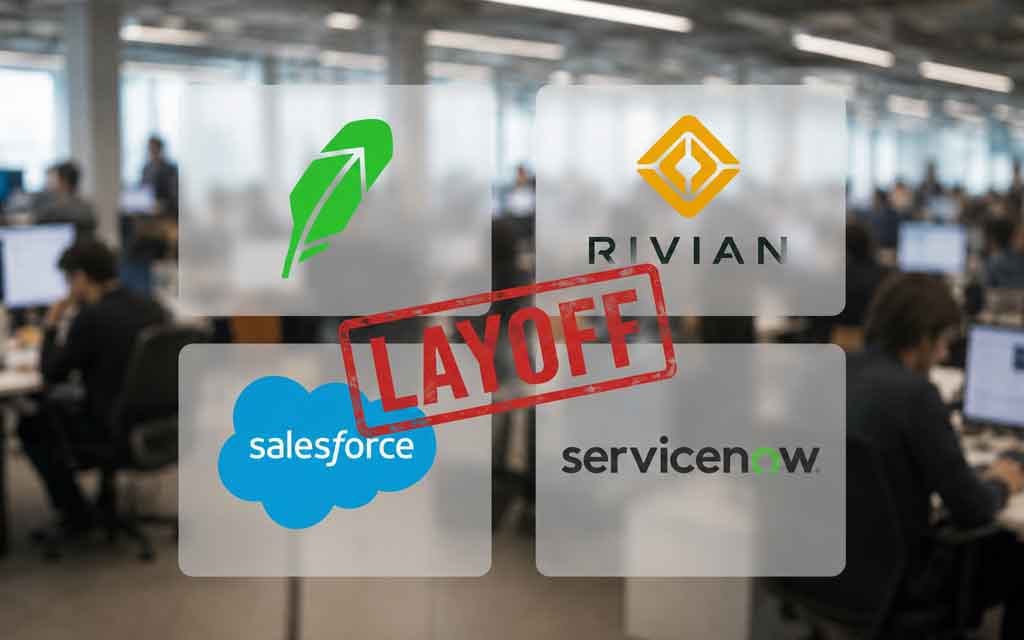
The week of June 16–20, 2026, saw several notable job cuts in the software, AI, and electric vehicle sectors. While not at the scale of the massive 2022–2023 tech downturn, these moves highlight ongoing restructuring as companies navigate AI-driven efficiency gains, profitability pressures in EVs, and a more cautious approach to headcount.
Here are the key announcements from the past several days and the broader context behind them.
Robinhood to Cut 10% of Workforce in Major Restructuring
Robinhood Markets announced plans to lay off approximately 290 employees, or about 10% of its full-time staff. The fintech and trading platform cited the need to flatten its organizational structure and operate more efficiently as it scales.
CEO Vlad Tenev noted in an internal memo that the company would “utilize frontier technologies to push our execution even further.” While not explicitly framed as an AI layoff, the language aligns with a growing trend of companies using AI tools and automation to reduce headcount while maintaining or growing output.
The cuts come as Robinhood continues to expand its product offerings in stocks, crypto, and retirement accounts.
Rivian Lays Off Hundreds Amid EV Profitability Push
Electric vehicle maker Rivian laid off hundreds of employees, representing less than 2% of its workforce (roughly 300 people). The cuts primarily affected the service and customer organization, including roles in sales and marketing.
The move comes shortly after Rivian began deliveries of its highly anticipated R2 SUV. The company has been working to narrow losses and reach profitability, a common challenge across the EV sector as demand growth has slowed and competition intensified.
Rivian joins other EV players that have made workforce adjustments in recent years as the industry shifts from hyper-growth to sustainable operations.
Salesforce Cuts Roles Tied to AI and Core Products
Salesforce laid off at least 86 employees, with additional cuts reported in Washington state and internationally. The reductions impacted teams working on Agentforce (its AI agent platform), Mulesoft, and Marketing Cloud.
This round continues Salesforce’s pattern of periodic restructuring as it integrates more AI capabilities into its enterprise software suite. Companies in the software space are increasingly citing AI as both a reason for cuts (automation of certain roles) and a major area of new investment.
ServiceNow Also Reduces Headcount as AI Adoption Grows
Enterprise workflow software company ServiceNow laid off dozens to hundreds of employees in recent weeks, including at least 63 positions in its San Diego office. The cuts affected senior roles in sales, consulting, and customer support.
Like Salesforce, ServiceNow has been vocal about increasing its use of artificial intelligence across its platform. The company’s CEO had previously stated there would be no layoffs, making these reductions notable.
Broader Context: AI and Efficiency Driving 2026 Layoffs
These announcements fit into a larger 2026 trend. So far this year, the tech industry has seen well over 150,000 job cuts. While economic conditions and post-pandemic overhiring played roles earlier, AI is increasingly cited as a direct or indirect factor in many reductions.
Companies are:
- Using AI tools to automate tasks previously done by humans
- Restructuring teams to focus resources on AI development and deployment
- Cutting middle-management layers as AI enables flatter organizations
At the same time, many of these same companies are pouring record amounts of capital into AI infrastructure, data centers, and model development. This creates a paradoxical situation: heavy investment in AI alongside workforce reductions in other areas.
In the EV and green tech space, the picture is more about demand normalization and path to profitability. Rivian’s cuts reflect the broader challenge facing EV makers as growth slows from the explosive levels seen in 2021–2023.
What This Means for the Industry
For software and AI companies: The current wave shows that even AI-focused firms are not immune to efficiency drives. Roles that can be automated or consolidated are being reduced, while demand remains strong for highly skilled AI engineers, researchers, and specialists who can build and deploy these systems.
For the EV sector: Rivian’s move underscores that the industry is maturing. Companies are prioritizing cost control and operational efficiency over rapid headcount growth. Green tech overall continues to face headwinds from higher interest rates, supply chain issues, and uneven policy support in some regions.
For workers: The job market remains competitive, particularly for mid-level roles that can be augmented or replaced by AI. Professionals with strong AI skills, domain expertise, and adaptability continue to be in higher demand. Many laid-off workers from big tech and software firms are finding opportunities at AI-native startups or in industries adopting AI tools.
Outlook for the Rest of 2026
Layoffs are likely to continue at a moderate pace rather than the dramatic spikes seen in previous years. Key themes to watch include:
- Further AI-related restructuring at enterprise software companies
- Additional efficiency moves in the EV sector as companies like Rivian, Lucid, and others work toward profitability
- Potential new rounds at hyperscalers and AI labs as they balance massive capital expenditures with operating expenses
The overarching story of 2026 is one of transition: companies are moving from the “build everything fast” phase of the AI boom to a more disciplined approach focused on ROI, efficiency, and sustainable growth.
While painful for those affected, these adjustments may ultimately create a leaner, more productive tech and clean tech ecosystem better positioned for long-term innovation.




Leave a Comment