
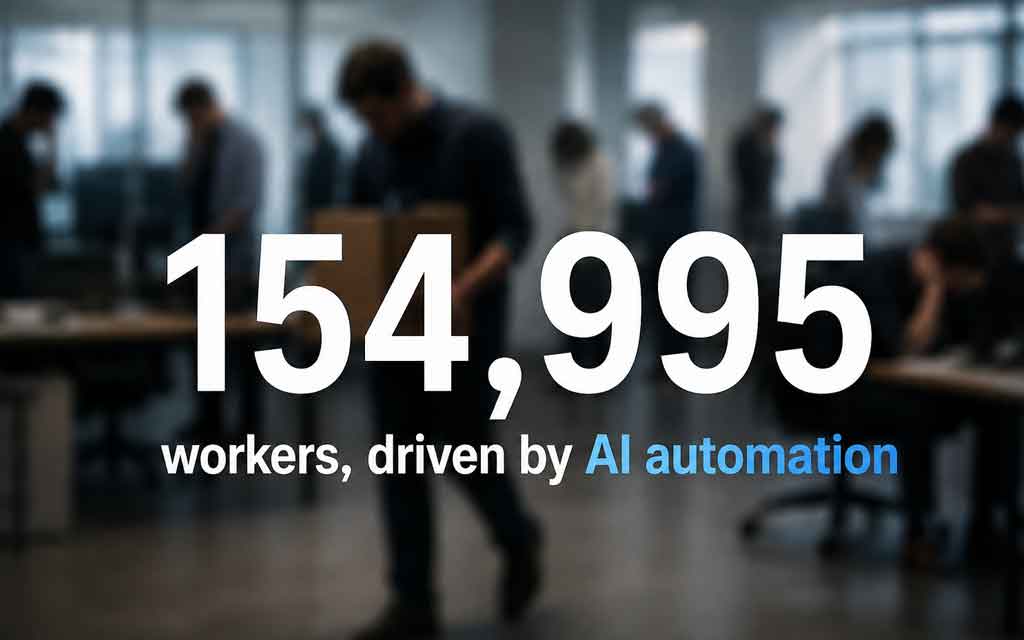
The tech industry continues to shed jobs at a rapid pace in 2026. According to multiple tracking sources, companies have cut more than 154,995 positions so far this year — a pace that already exceeds last year’s totals in some analyses and shows no immediate signs of slowing.
Current Layoff Numbers
As of mid-June 2026, independent trackers such as TrueUp report approximately 156,000 tech workers impacted across hundreds of companies. Other sources, including layoffs.fyi and Crunchbase, show slightly lower but still significant figures in the 120,000–130,000 range, depending on how broadly “tech” is defined.
The pace is notable: roughly 900 people per day have been laid off on average in the tech sector this year.
Major Companies Driving the Cuts
Several high-profile companies have announced large-scale reductions:
- Meta: Multiple rounds totaling over 16,000 jobs
- Amazon: Around 19,000 positions eliminated
- Oracle: Significant cuts exceeding 30,000 in some tallies
- Dell: Over 16,000 jobs cut
- LinkedIn, Lucid, Robinhood, Block, PayPal, and Cisco: Also featured prominently in layoff announcements
Other notable names include Nokia, Cognizant, and various AI and software firms undergoing restructuring.
Why the Layoffs Continue
Several interconnected factors are driving the ongoing cuts:
1. AI-Driven Efficiency Many companies are explicitly citing artificial intelligence and automation as reasons for reducing headcount. Tools that can write code, handle customer support, analyze data, and automate routine tasks are allowing firms to operate with smaller teams.
2. Post-Pandemic Overhiring Correction The massive hiring spree between 2020–2022 left many companies with bloated workforces. After years of aggressive expansion, firms are now rightsizing to match current revenue realities and productivity gains from AI.
3. Cost Pressures and Investor Expectations With high interest rates persisting longer than expected and investors demanding profitability, companies are under pressure to cut costs. Tech firms that grew rapidly during the low-rate era are now facing a harsher financial environment.
4. Shift in Strategic Priorities Many organizations are reallocating resources toward AI infrastructure, data centers, and new product development rather than maintaining legacy teams and operations.
Impact on Workers
The human cost has been significant. Laid-off workers — many of them experienced engineers, product managers, and support staff — are facing a more competitive job market than in previous years. While some sectors (particularly AI infrastructure and specialized roles) remain strong, overall tech hiring has cooled considerably.
Many workers report longer job search times, increased competition for fewer openings, and in some cases, salary compression compared to 2021–2022 peaks.
Is This Different From Previous Years?
While tech layoffs are not new, the 2026 wave has some distinct characteristics:
- Faster pace than 2025 in several trackers
- More explicit connection to AI replacing human roles
- Continued cuts even at profitable companies
- Broader impact across both big tech and mid-sized firms
Unlike the sharp but shorter correction in 2022–2023, this appears to be a more sustained restructuring as the industry adapts to the AI era.
What Comes Next?
Analysts are divided on whether the worst is over. Some believe companies have largely completed their major restructuring and that layoff activity will gradually decline in the second half of 2026. Others argue that as AI capabilities continue to improve rapidly, more roles — even in engineering and specialized technical work — could face automation pressure.
The key variables to watch include:
- How aggressively companies continue adopting AI tools
- Overall economic conditions and interest rate trajectory
- Performance of AI-related revenue streams (which could either justify further investment or lead to more cuts if returns disappoint)
Bottom Line
The figure of over 154,995 tech layoffs in 2026 so far reflects a fundamental shift in the industry. Companies are using AI not just to grow, but to operate more efficiently with fewer people. While this may ultimately lead to higher productivity and new types of jobs, the transition is proving painful for hundreds of thousands of workers.
For the broader tech ecosystem, the message is clear: the era of easy growth and large teams is over. The winners in the coming years will likely be those who can deliver more value with leaner, AI-augmented organizations.




Leave a Comment