
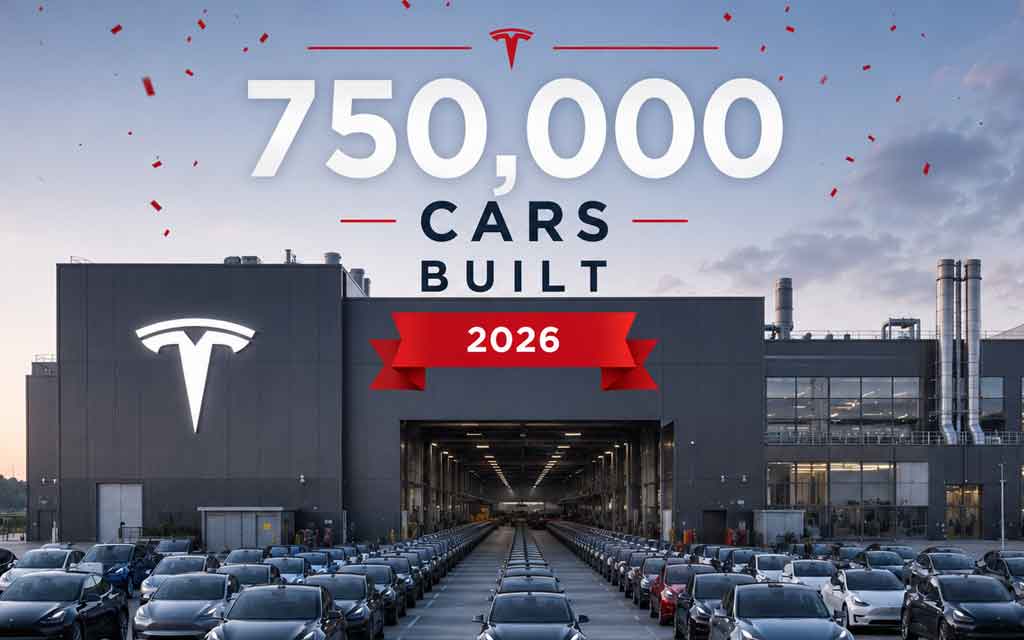
Tesla has officially reached a major production landmark at Gigafactory Berlin-Brandenburg. On May 11, 2026, the company announced that its European flagship plant in Grünheide, Germany, has now built 750,000 vehicles since opening in March 2022 — almost entirely Model Y SUVs.
In a powerful video shared by Tesla Manufacturing, the team showcased the immense scale of operations behind this achievement. Titled “750,000 cars built at Giga Berlin. Here’s what it takes.”, the clip highlights the raw materials, automation, and relentless innovation that turned a greenfield site into one of Tesla’s most important factories worldwide.
For anyone following Tesla stock, EV manufacturing, or sustainable automotive tech, this milestone underscores Giga Berlin’s rapid rise — and its growing role in Tesla’s global strategy.
Tesla Giga Berlin Milestone: From Startup to Powerhouse in Just Over 4 Years
Gigafactory Berlin-Brandenburg broke ground in 2020 and began limited production in March 2022. What started as a bold bet on European manufacturing has now delivered 750,000 Model Y vehicles in roughly 50 months.
The factory has become Tesla’s primary hub for the European market, supplying right-hand-drive and left-hand-drive Model Y variants to customers across the continent. Recent quarterly records show the momentum:
- Q1 2026: Record 61,000+ vehicles produced
- Current weekly output: Approximately 5,000 cars per week
This pace positions Giga Berlin as one of Tesla’s highest-volume plants outside the United States.
What It Takes: The Mind-Blowing Stats Behind 750,000 Cars
Tesla’s official video reveals the staggering resources required to hit this milestone. Here are the key numbers that define Giga Berlin’s achievement:
- 95,000 tons of aluminum melted for massive Giga Castings (rear and front underbody structures)
- Over 10 million die shop parts produced
- 130,000+ tons of total steel and aluminum processed
- More than 1 million electric drive units installed in vehicles built at the site
- 93,000 miles driven autonomously by freshly built Model Ys using Full Self-Driving (FSD) as they move from the production line to the storage lot
These figures highlight Tesla’s vertical integration and advanced manufacturing techniques. The giant Giga Press machines — the largest in the world — cast entire vehicle sections in one piece, slashing parts count, weight, and assembly time compared to traditional methods.
Advanced Manufacturing Technologies Powering Giga Berlin
Several cutting-edge innovations make Giga Berlin one of the most efficient and sustainable auto plants on the planet:
- Giga Casting: Single-piece aluminum castings replace hundreds of stamped and welded parts
- 4680 Battery Cell Integration: On-site cell production and structural battery packs
- High-Degree Automation: Robotic assembly lines combined with human expertise
- Full Self-Driving Validation: New vehicles autonomously navigate the factory grounds
- Zero Process Wastewater: The plant achieved a full year with zero process wastewater discharge
These technologies not only boost output but also reduce costs and environmental impact — key advantages as Tesla scales globally.
Production Ramp: 20% Increase and 1,000 New Hires Coming
The 750,000-car milestone arrives alongside ambitious expansion plans. Plant manager André Thierig recently confirmed:
- A 20% increase in Model Y production
- Hiring of approximately 1,000 additional workers
This ramp-up follows a strong Q1 2026 and reflects growing European demand for the Model Y, Tesla’s best-selling vehicle. The factory is now targeting its 1 millionth vehicle as the next major internal goal.
Elon Musk personally congratulated the Giga Berlin team, reinforcing Tesla’s commitment to European manufacturing excellence.
Overcoming Challenges: Regulatory, Supply Chain, and Local Integration
Giga Berlin’s journey wasn’t without hurdles. The factory faced intense regulatory scrutiny over water usage and environmental permits, supply chain disruptions, and the complexities of building a massive plant in Germany.
Yet the team delivered consistent quarterly growth throughout 2025 and into 2026. Tesla’s focus on localization — sourcing more materials and components within Europe — has strengthened resilience and reduced logistics emissions.
Why the Giga Berlin Milestone Matters for Tesla and the EV Industry
Reaching 750,000 vehicles at Giga Berlin is more than a number — it proves Tesla can successfully scale advanced EV manufacturing in a highly regulated, high-cost region like Europe.
For investors, it signals:
- Stronger European market share
- Reduced reliance on Shanghai and U.S. factories
- Progress toward Tesla’s long-term volume targets
For the broader EV sector, it demonstrates that next-generation factories combining massive casting, battery integration, and AI-driven automation can achieve both speed and sustainability.
What’s Next for Gigafactory Berlin?
With the 20% production boost underway and the path to 1 million vehicles clearly in sight, Giga Berlin is poised for even greater output. Industry speculation also points to potential future production of new models, including the rumored Cybercab robotaxi, at the German site.
As Tesla continues pushing the boundaries of electric vehicle manufacturing, Giga Berlin stands as a shining example of what’s possible when world-class engineering meets determined execution.
What do you think — will Giga Berlin hit 1 million cars before the end of 2026? Drop your predictions in the comments.
Stay updated on the latest Tesla news, Gigafactory updates, and EV industry insights at vfuturemedia.com. Follow us for real-time coverage of Tesla milestones, production ramps, and future mobility trends.



Leave a Comment