
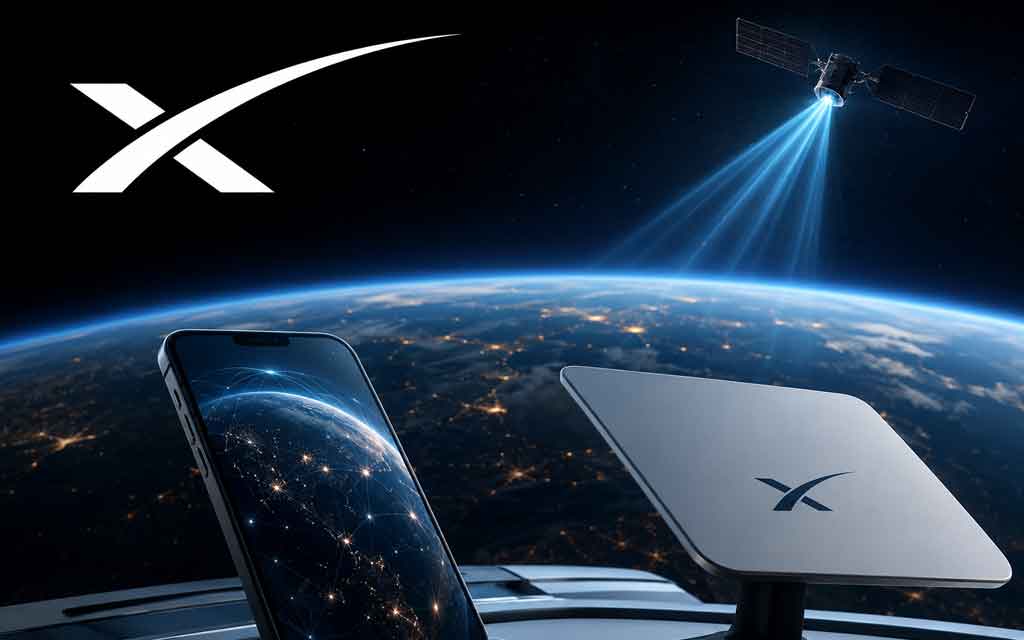
SpaceX is reportedly exploring a direct-to-consumer version of Starlink mobile service, potentially allowing users to connect directly to its satellite network without going through traditional cellular carriers. The move would mark a significant evolution for the company’s satellite communications business and could reshape how people access mobile connectivity, especially in underserved areas.
While Starlink has already begun direct-to-cell partnerships (notably with T-Mobile in the United States), a consumer-facing offering would give SpaceX more control over pricing, features, and the end-user experience.
What “Direct-to-Consumer” Starlink Mobile Would Mean
Starlink’s existing direct-to-cell technology enables compatible smartphones to connect to satellites for texting, and eventually voice and data, in areas without terrestrial coverage. Currently, these services are largely delivered through partnerships with mobile carriers.
A direct-to-consumer model would let individuals subscribe to Starlink mobile directly from SpaceX. Users could potentially activate satellite connectivity on supported devices without needing a traditional carrier plan for that portion of service — or use it as a standalone or backup connection.
This approach would appeal most strongly to:
- Rural and remote users with poor or no cellular coverage
- Travelers and outdoor enthusiasts
- Emergency preparedness and off-grid communities
- International users in regions with limited infrastructure
It would also position Starlink as both an infrastructure provider (satellites and ground stations) and a retail service operator in the mobile space.
Why SpaceX Is Considering This Move Now
Several factors appear to be driving the reported exploration:
- Technology readiness — Starlink’s direct-to-cell constellation has advanced rapidly. With thousands of satellites already in orbit and more launches planned, coverage and capacity are improving.
- Market opportunity — Billions of people worldwide still lack reliable mobile connectivity. Even in developed markets like the U.S., significant rural gaps remain.
- Carrier partnership dynamics — While partnerships provide scale and regulatory simplicity, they also involve revenue sharing and less control over the customer relationship. A direct offering could improve margins and brand ownership.
- Competitive landscape — Apple’s emergency satellite features, Google’s planned satellite capabilities, and Amazon’s Project Kuiper all signal growing interest in space-based connectivity. SpaceX appears determined to lead rather than follow.
The timing also aligns with Starlink’s broader maturation. The company has moved from proving the technology to scaling operations and exploring new revenue streams beyond residential and enterprise broadband.
Benefits for Consumers
A direct-to-consumer Starlink mobile service could deliver several advantages:
- Expanded coverage — Seamless connectivity in remote areas, during travel, or in disaster situations where terrestrial networks fail.
- Simpler options — Potential for standalone satellite plans or hybrid bundles that combine terrestrial and satellite access under one provider.
- Innovation speed — SpaceX could iterate faster on features, pricing, and device integration without needing carrier approval for every change.
- Global consistency — Users traveling internationally might experience more uniform satellite connectivity compared to roaming agreements between carriers.
For many users, especially those in rural America or developing regions, this could represent the first reliable mobile experience they’ve ever had.
Implications for Traditional Carriers
Carriers would likely view a direct Starlink mobile offering with caution. On one hand, it could complement their networks by handling traffic in hard-to-reach areas, reducing the need for expensive tower builds. On the other hand, it introduces a new competitor that could capture high-margin rural and roaming revenue.
Some carriers might respond by deepening partnerships with SpaceX or accelerating their own satellite strategies. Others could focus on differentiating through superior urban 5G/6G performance, bundled services, or exclusive content.
The net effect would likely be increased competition and innovation in the connectivity space — generally positive for consumers but potentially disruptive for legacy business models.
U.S. Innovation Leadership in Space Communications
SpaceX’s push into direct-to-consumer mobile service reinforces America’s leadership in space-based communications. The company has already transformed satellite internet with Starlink’s low-Earth orbit constellation, dramatically reducing latency compared to traditional geostationary systems.
Extending that capability to everyday mobile phones represents another leap. It builds on decades of American investment in aerospace, satellite technology, and telecommunications — from NASA programs to commercial innovation.
This move also supports broader national goals around digital equity and resilient infrastructure. Reliable mobile connectivity is increasingly essential for education, healthcare, emergency services, and economic opportunity. SpaceX’s technology offers a scalable way to extend coverage without the massive capital expenditure required for terrestrial networks in remote areas.
Challenges and Open Questions
Despite the exciting potential, several hurdles remain:
- Regulatory approval — Direct mobile service would require spectrum licenses and coordination with the FCC and international bodies. Existing carrier partnerships have helped navigate some of these issues.
- Device compatibility — Not all phones currently support satellite connectivity. Widespread adoption would depend on manufacturers integrating the necessary hardware and software.
- Capacity and performance — Satellite networks have inherent limitations in bandwidth and latency compared to terrestrial 5G in dense areas. Direct-to-consumer service would need clear use-case positioning.
- Pricing and business model — SpaceX would need to find pricing that attracts consumers while covering the high costs of satellite deployment and operations.
- Competition — Apple, Google, Amazon, and other players are also advancing satellite capabilities, potentially fragmenting the market.
SpaceX has a track record of overcoming technical and regulatory challenges, but success in the consumer mobile market would require execution across multiple fronts.
What This Could Mean for the Future of Connectivity
If SpaceX successfully launches a direct-to-consumer Starlink mobile service, it could accelerate several trends:
- Hybrid terrestrial-satellite networks becoming the norm rather than the exception.
- Greater resilience for critical communications during natural disasters or infrastructure failures.
- Faster closing of the digital divide in rural and developing regions.
- New business models that blend connectivity with other SpaceX offerings (such as integrated Tesla or Starlink ecosystem experiences).
It would also intensify the global race for space-based communications infrastructure, with implications for national security, economic competitiveness, and technological sovereignty.
Frequently Asked Questions
What is direct-to-consumer Starlink mobile? It would allow individuals to subscribe directly to Starlink’s satellite network for mobile connectivity (text, voice, and data) on compatible phones, potentially without needing a traditional carrier for that service.
How is this different from current Starlink partnerships? Current direct-to-cell services are primarily delivered through carrier partners. A direct-to-consumer model would let users buy the service straight from SpaceX.
When might this become available? No official timeline has been confirmed. SpaceX would need to complete regulatory, technical, and commercial milestones before a full launch.
Will it replace my current phone plan? Likely not for most urban users. It would probably serve best as a complement or primary option in areas with weak terrestrial coverage.
How does this compare to Apple’s emergency satellite feature? Apple’s offering is currently limited to emergency messaging. Starlink aims for broader text, voice, and data capabilities on a subscription basis.
The Bottom Line
SpaceX’s reported exploration of a direct-to-consumer Starlink mobile service represents another ambitious step in the company’s mission to make connectivity ubiquitous. By potentially offering satellite mobile service directly to end users, SpaceX could expand access, increase competition, and accelerate innovation in how people stay connected around the world.
The move fits squarely within America’s tradition of bold technological leadership in space and communications. While significant challenges remain, the potential benefits — especially for rural communities, travelers, and regions with limited infrastructure — are substantial.
As satellite technology continues to advance and integrate more seamlessly with everyday devices, the line between terrestrial and space-based connectivity is blurring. SpaceX appears determined to be at the forefront of that transformation.
Whether through partnerships or direct offerings, the era of truly global, reliable mobile connectivity is getting closer — and American innovation is helping lead the way.
Would you consider subscribing to a direct Starlink mobile service for backup or primary connectivity? What features would matter most to you? Share your thoughts in the comments.



Leave a Comment