
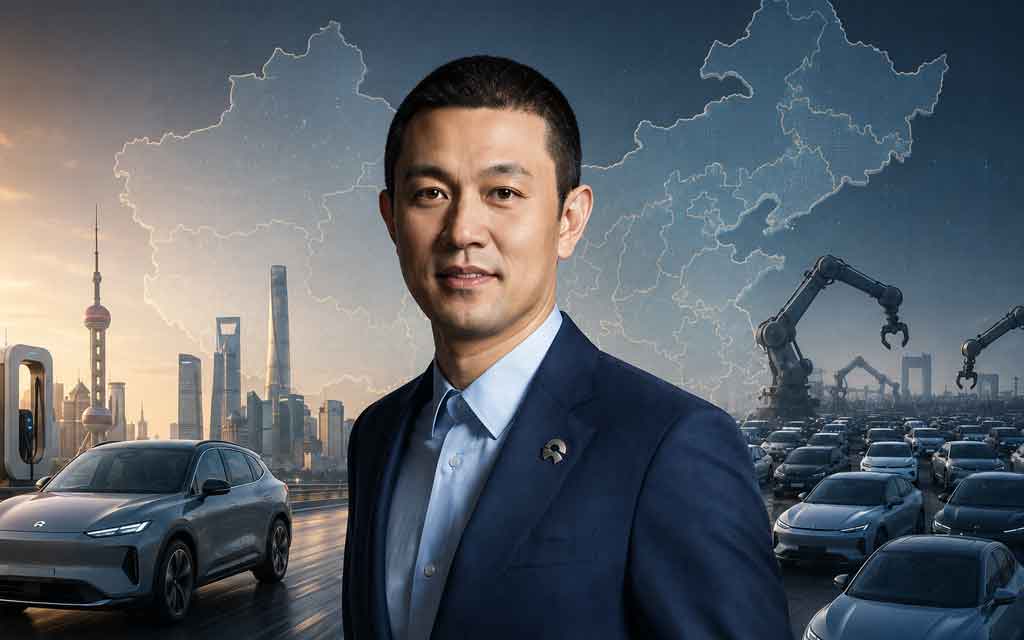
In a candid admission that’s sending ripples through the automotive world, NIO CEO William Li declared on May 28, 2026, that China’s once-booming auto industry is unlikely to return to its “golden era.” This statement comes amid persistent weakness in domestic car sales, highlighting a major shift in the world’s largest vehicle market.
Why NIO’s CEO Says the Golden Era Is Over
Speaking to reporters in Beijing, William Li pointed to clear signs of market saturation. China now has around 370 million vehicles on the road, and a much-anticipated rebound in domestic demand has failed to materialize despite strong export performance.
Key points from Li’s remarks:
- Domestic sales downturn extended into May 2026.
- The era of rapid, easy growth is behind the industry.
- Focus for NIO remains firmly on the home market while navigating tougher conditions.
This marks a significant reality check for an industry that powered massive growth through the 2010s and early 2020s, fueled by government incentives, rising middle-class wealth, and the explosive rise of electric vehicles (EVs).
The Bigger Picture: Saturation, Competition, and Export Strength
China’s auto sector transformed from a domestic growth story into a global powerhouse. Chinese brands like BYD, NIO, XPeng, and others now lead in EV and plug-in hybrid technology. Yet intense price competition, overcapacity, and high vehicle ownership have cooled the domestic engine.
Positive notes:
- Exports continue to surge, helping offset weaker home sales.
- Chinese manufacturers are gaining significant market share in Europe and other regions.
- Innovation in battery technology, autonomous driving, and premium EVs remains strong.
For premium EV maker NIO, the message appears pragmatic: the days of unchecked expansion at home are over, but opportunities still exist through differentiation, Battery-as-a-Service (BaaS), and premium positioning.
Implications for Investors, Automakers, and the Global EV Market
1. For EV Investors This statement could pressure valuations across Chinese EV stocks in the short term. However, it may also signal maturation — shifting focus from volume-at-all-costs to profitability, technology leadership, and international expansion. Savvy investors are watching how NIO, Li Auto, and others adapt their strategies.
2. For Global Competitors Legacy automakers (Toyota, Volkswagen, GM, etc.) face a more aggressive Chinese export machine. With domestic growth slowing, expect intensified competition in Southeast Asia, Europe, and Latin America.
3. For the Future of Mobility The end of the “golden era” doesn’t mean the end of progress. It likely heralds a new phase focused on:
- Sustainable profitability
- Advanced driver-assistance systems (ADAS)
- Battery swapping and solid-state innovations
- Global supply chain resilience
What’s Next for NIO and China’s EV Giants?
NIO recently launched models like the ES9 flagship SUV and continues investing heavily in user experience and autonomous technology. The company’s resilience will be tested as it navigates slower domestic growth while scaling overseas.
Conclusion William Li’s frank assessment underscores a pivotal moment: China’s auto industry is transitioning from explosive growth to a more competitive, mature phase. For forward-looking investors and businesses, this creates both challenges and fresh opportunities in the evolving global EV landscape.
At VFuture Media, we track these shifts closely to deliver actionable insights on electric vehicles, autonomous tech, and sustainable mobility.
Stay ahead of the curve — subscribe for more in-depth analysis on the future of automotive innovation.

Leave a Comment