
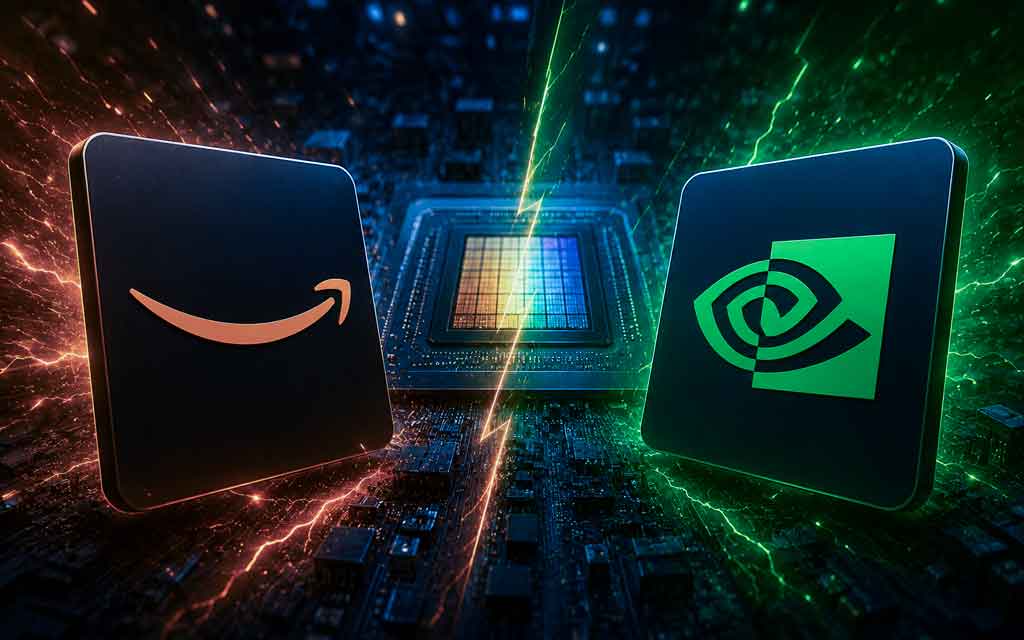
Amazon is taking steps that could significantly expand the battle for AI chip supremacy.
According to Bloomberg, Amazon is in discussions to sell its custom-made Trainium AI accelerators for use in other companies’ data centers — a notable shift from its previous strategy of keeping these chips exclusive to Amazon Web Services (AWS).
The move would put Amazon’s silicon in direct competition with Nvidia’s GPUs, which currently dominate AI training and inference workloads. While the talks are still early, the development signals Amazon’s growing confidence in its homegrown chips and its ambition to become a broader player in the AI hardware market.
Amazon’s Custom AI Chip Strategy
Amazon has been developing its own AI chips for years as part of a broader effort to reduce reliance on Nvidia and lower costs for its massive AI workloads.
Key chips in Amazon’s portfolio include:
- Trainium — Designed primarily for AI model training. The latest generations (Trainium3 and the upcoming Trainium4) offer strong performance-per-dollar advantages for many workloads.
- Inferentia — Focused on AI inference (running trained models), delivering high throughput at lower cost than traditional GPUs for many production use cases.
- Graviton — Arm-based general-purpose processors that also power significant portions of AWS.
These chips have already seen strong internal adoption. Major AI companies including Anthropic, OpenAI, and others use Trainium and Inferentia instances on AWS. Demand has been so high that some Trainium capacity has sold out.
In his April 2026 shareholder letter, Amazon CEO Andy Jassy highlighted the scale of the opportunity, noting that if the chips business operated as a standalone company selling to both AWS and external customers, it could already have an annual run rate of around $50 billion.
Why Sell Chips Externally Now?
Several factors appear to be driving Amazon’s interest in external sales:
- Proven Performance and Demand Internal usage has validated the chips’ capabilities. Strong demand inside AWS has given Amazon confidence that there is external appetite as well.
- Cost and Availability Pressures Many companies face high costs and limited availability when trying to secure large volumes of Nvidia GPUs. Amazon’s chips offer a compelling alternative on price/performance for certain workloads.
- Strategic Diversification Selling chips directly (or as full racks) allows Amazon to capture more value from its silicon investments and expand its influence beyond cloud services.
- International Opportunities Some potential customers may be looking for alternatives to U.S.-centric supply chains or seeking localized AI infrastructure solutions.
Amazon AI chief Peter DeSantis told Bloomberg that discussions with potential buyers have begun, though no specific customers have been named and the talks remain preliminary.
Implications for the AI Chip Market
This development carries several important implications:
For Nvidia: While Nvidia remains the clear leader with its CUDA ecosystem and broad software support, any credible alternative gaining traction adds pressure. Amazon’s move could accelerate the trend of hyperscalers and enterprises diversifying their AI accelerator mix.
For Amazon/AWS: Successfully selling chips externally would validate years of investment in custom silicon and potentially create a new high-margin revenue stream. It also strengthens Amazon’s position in the broader AI infrastructure stack.
For Enterprises and AI Companies: More options could help ease GPU shortages and provide better economics for training and inference at scale. However, buyers will need to evaluate software support, ecosystem maturity, and long-term roadmaps.
For the Industry Overall: This reflects a broader shift toward vertical integration and custom silicon among the largest tech companies. Google has long sold access to its TPUs (though mostly via Google Cloud), and other players are exploring similar strategies.
Challenges Amazon Will Face
Selling chips outside AWS is not without hurdles:
- Software Ecosystem — Nvidia’s CUDA remains the dominant platform. Amazon has invested heavily in its Neuron SDK, but broader adoption will require continued improvements in developer experience and framework support.
- Support and Integration — External customers will expect robust documentation, tools, and support — areas where Nvidia currently excels.
- Market Education — Many organizations are still heavily invested in the Nvidia ecosystem. Convincing them to adopt or mix in Amazon chips will take time and proven results.
- Potential Channel Conflict — Selling chips directly could create tension with AWS customers who currently access Trainium through the cloud.
Amazon appears aware of these dynamics. Executives have emphasized that the company is not worried about cannibalizing cloud revenue and sees external chip sales as complementary.
Outlook: Early Days but Significant Signal
The talks reported by Bloomberg are still in early stages, and it remains to be seen how quickly (or whether) Amazon moves from discussions to actual sales of chips or full server racks.
However, the signal is meaningful. It shows that Amazon believes its custom silicon has reached a level of maturity and competitiveness where it can be offered beyond its own cloud. Combined with strong internal demand and Andy Jassy’s public comments about the potential scale of the business, this positions Amazon as a more serious long-term contender in the AI accelerator market.
As AI infrastructure spending continues to grow rapidly, the battle between Nvidia’s general-purpose dominance and the rise of custom, workload-optimized chips from hyperscalers is likely to intensify.
Amazon’s potential move into external chip sales adds another front to that competition.
FAQs
What chips is Amazon considering selling? Primarily its Trainium family of AI training accelerators, with potential for full server racks. Inferentia (inference-focused) chips could follow.
Why is this a challenge to Nvidia? Nvidia currently dominates the AI chip market. Amazon offering a credible, lower-cost alternative for certain workloads could help customers diversify and put pressure on pricing and availability.
Has Amazon sold chips externally before? Historically, Amazon has kept Trainium and Inferentia exclusive to AWS. This would mark a significant expansion of its silicon strategy.
When might sales begin? Talks are described as early-stage. No timeline has been confirmed.
How does this fit with Amazon’s broader strategy? It aligns with Amazon’s long-term push into custom silicon (Trainium, Inferentia, Graviton) to reduce costs, improve performance for its own workloads, and now potentially generate new revenue streams.




Leave a Comment