
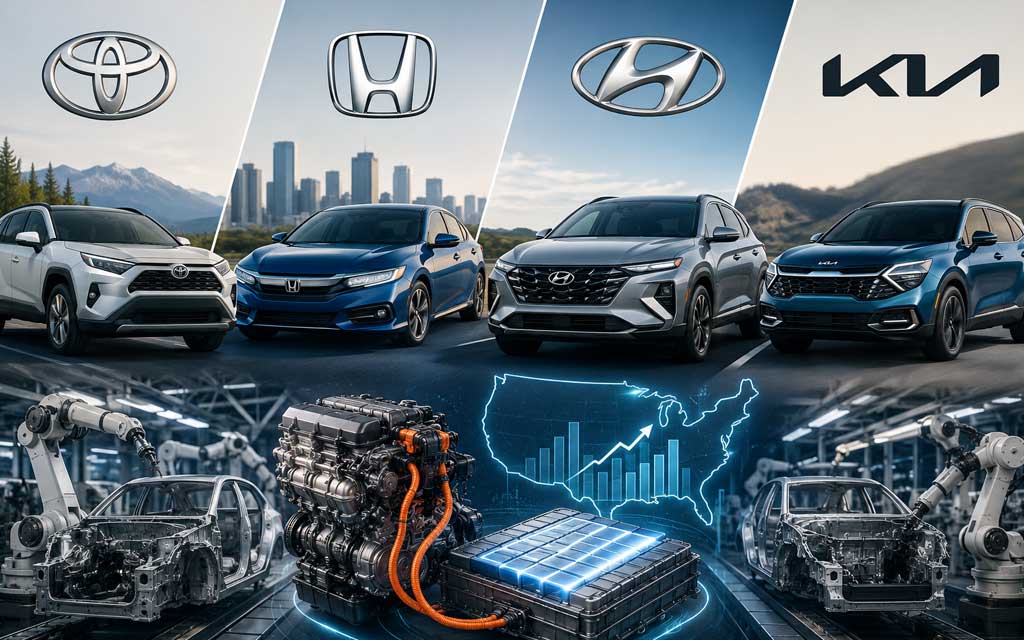
On a stretch of Interstate 75 north of Atlanta in mid-July 2026, the traffic mix tells a clear story. Toyota RAV4 Hybrids and Camry Hybrids glide past with quiet confidence. Honda CR-Vs and Accords in hybrid form appear frequently. Hyundai Tucson and Santa Fe hybrids mingle with Kia counterparts. Pure battery-electric vehicles remain visible—especially Teslas and a scattering of other brands—but their share of the flow feels less dominant than the industry forecasts of two years earlier suggested.
This is the hybrid revival in plain sight. In the first half of 2026 and particularly in the second quarter, U.S. hybrid sales have surged while pure battery-electric vehicle growth has cooled or declined year-over-year. Automakers that leaned heavily into hybrids—Toyota first among them, followed by Honda, Hyundai, and Kia—are posting stronger results. Those more heavily exposed to pure EVs without broad hybrid lineups have felt the pressure. The shift reflects consumer pragmatism more than any single technological breakthrough or policy mandate.
The Numbers Behind the Shift
Second-quarter 2026 U.S. sales data from major manufacturers and analysts paint a consistent picture. Toyota reported solid overall volume with electrified vehicles (predominantly hybrids) climbing roughly 20 percent and accounting for a high share of its total—approaching or exceeding 50 percent in some periods. Honda posted gains helped by strong hybrid contributions, with hybrids representing a notable portion of its mix. Hyundai recorded hybrid sales increases in the 70 percent range for the quarter in some reports, building on even larger year-to-date jumps. Kia showed similar explosive hybrid growth in earlier periods.
By contrast, pure EV sales faced headwinds. One analysis put U.S. EV volume down about 21 percent in Q2 2026 compared with the prior year. Hybrids, which never relied on the federal tax credit that expired in late 2025, continued climbing and in some datasets reached mid-teens percentage shares of total retail sales—far outpacing plug-in hybrids and closing the gap with, or surpassing, pure EV volume in certain comparisons. Overall electrified share (hybrids + PHEVs + BEVs) remained healthy precisely because of the hybrid strength.
Cox Automotive and other trackers noted hybrids accounting for a record portion of the market, with growth exceeding 80 percent since 2023 in some cumulative views. The pattern is not limited to the United States, but the American market—large, diverse in driving conditions, and sensitive to fuel prices and infrastructure—has made the hybrid case especially clear.
Why Consumers Are Choosing Hybrids
Talk to drivers on American roads and the reasons surface quickly. Range anxiety has not disappeared. Long-distance travel, rural living, apartment dwellers without reliable home charging, and inconsistent public-charger experiences still deter many households from full electrification. A hybrid eliminates the need to plan around plugs while delivering substantially better fuel economy than a conventional gasoline vehicle—often 40–50 mpg combined in popular crossovers and sedans under real-world conditions.
Pricing and availability matter. Many hybrid models carry smaller premiums over their gas counterparts than equivalent EVs, and inventory has been more consistent in some segments. Higher gasoline prices in periods of 2026 further amplified the operating-cost advantage. Regenerative braking systems, refined over years of Toyota and Honda development, recover energy in daily stop-and-go driving without requiring driver behavior changes.
“I wanted the efficiency without the lifestyle change,” said one suburban Ohio driver who traded a conventional SUV for a late-model hybrid crossover. “I still fill up at the same stations. I just do it less often, and the car feels smoother.” Similar comments appear across owner forums and dealer feedback in California, Texas, and the Midwest.
Automaker Strategies: Doubling Down
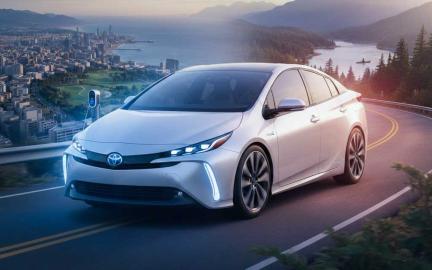
Toyota’s long-standing hybrid bet looks prescient in 2026. Models such as the RAV4 Hybrid, Camry Hybrid (now hybrid-focused in many configurations), Grand Highlander Hybrid, and Sienna have become volume mainstays. Production adjustments, including expanded capacity in Kentucky for high-demand models, aim to meet wait lists that still stretch in some regions. Toyota’s electrified share has become a competitive advantage as pure-EV enthusiasm moderated.
Honda has leaned into hybrids as a core pillar, with strong sales contributions from its crossover and sedan lineup. Hyundai and Kia have rapidly expanded hybrid offerings and seen outsized growth rates, positioning themselves as serious challengers in the segment Toyota long dominated. American brands present a more mixed picture. Ford continues hybrid and plug-in options alongside its EV efforts. General Motors, with a broader pure-EV portfolio but limited hybrid volume outside specialty models, has faced tougher comparisons in recent quarterly results.
The strategic logic is straightforward. Hybrids leverage existing manufacturing expertise, dealer service networks, and customer familiarity. They require smaller batteries than pure EVs, easing pressure on supply chains and costs. They deliver immediate, measurable fuel savings and emissions reductions without depending on the pace of charger deployment.
Policy, Tariffs, and the Broader Context
The expiration of the federal clean-vehicle tax credit removed a key subsidy that had supported pure EV and some plug-in hybrid purchases. Hybrids, ineligible for that credit in most cases, faced no equivalent cliff. State-level incentives, particularly in California, continue to favor electrification broadly but have not fully offset the federal change for many buyers. Tariffs and trade policy affecting battery materials and imported components have also influenced relative costs, sometimes favoring powertrains with smaller battery packs.
These policy shifts interact with infrastructure realities. Public charging has expanded, yet reliability, speed, and geographic coverage still lag the convenience of the gasoline network for many Americans. Until that gap narrows more decisively, hybrids retain a structural advantage for a large segment of buyers.
Environmental Trade-offs and Technology
Hybrids are not zero-emission vehicles. They still burn gasoline and produce tailpipe emissions, albeit at lower rates than conventional counterparts. Full battery-electric vehicles deliver greater lifetime emissions reductions when charged on cleaner grids, particularly as renewable generation grows. Critics argue that heavy hybrid investment risks locking in fossil-fuel infrastructure longer than necessary.
Supporters counter that hybrids achieve real, scalable reductions today across millions of vehicles without waiting for perfect charging networks or cheaper long-range batteries. Regenerative systems and sophisticated power-split devices have matured into highly efficient packages. Battery technology improvements—higher energy density, better thermal management—benefit both hybrids and pure EVs, but hybrids can use smaller packs more readily.
Expert observers describe the moment as pragmatic rather than ideological. “Consumers are voting for vehicles that solve their actual daily constraints,” one automotive analyst noted in recent commentary. “Hybrids do that for a large middle of the market right now. The long-term trajectory still points toward greater electrification, but the timeline has lengthened.”
Driver Stories and Real-World Efficiency
Across American roads the practical advantages appear in everyday use. A Texas family with a hybrid SUV reports routinely exceeding 40 mpg on mixed highway and suburban routes, with no change in vacation or commuting patterns. A California commute that once required careful charge planning in a pure EV becomes ordinary in a plug-in hybrid or strong hybrid. Fleet operators in logistics and sales roles cite lower fuel spend and high uptime without depot charging investments.
These stories do not negate the strengths of pure EVs for drivers with reliable home charging and mostly local travel. They do explain why hybrid volume has expanded so rapidly when pure EV growth decelerated.
Bridge or Long-Term Solution?
The central question for 2026 and beyond is whether the hybrid revival is a temporary bridge or a durable part of the mobility mix. Optimists for rapid full electrification see hybrids as a transitional technology that will fade as battery costs fall, ranges increase, and charging becomes ubiquitous. Others argue that hybrids—especially as they incorporate more advanced electrification and eventually synthetic or lower-carbon fuels—could remain relevant for decades in regions or use cases where pure battery solutions face persistent barriers.
Automakers appear to be preparing for both possibilities. They continue EV development while expanding hybrid capacity and model variety. The companies best positioned are those that can flex production and product strategy as consumer preferences and infrastructure evolve.
In the summer of 2026, the hybrid revival is neither a rejection of electrification nor a simple return to the past. It is a market correction toward vehicles that deliver efficiency gains within the constraints of current American driving realities—range needs, infrastructure, pricing, and convenience. Pure EVs will continue to improve and gain share in favorable segments. For a large portion of buyers today, however, the hybrid has reasserted itself as the practical path to lower fuel use and emissions. How long that window remains open will depend on the speed of charging progress, battery economics, and policy stability in the years ahead.

Leave a Comment