
By Ethan Brooks Published: February 14, 2026 | VFuture Media – Electric Vehicles & Future Mobility
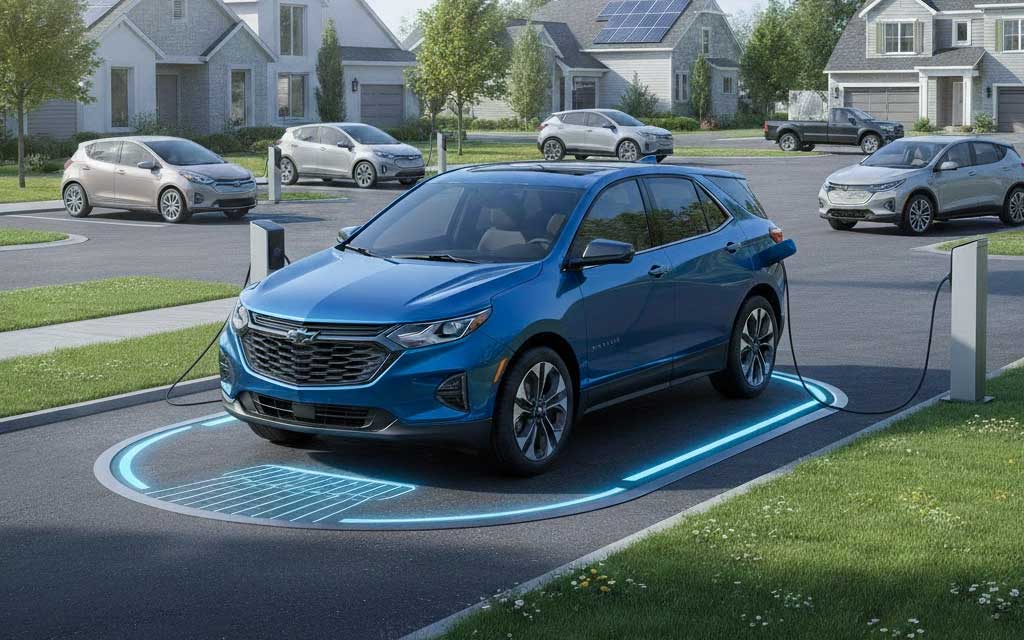
Affordability remains the biggest hurdle—and the biggest opportunity—for widespread Affordable EVs USA 2026 adoption. With federal EV tax credits largely phased out after September 2025 due to recent legislative changes (including the One Big Beautiful Bill Act), automakers are stepping up with aggressive pricing, discounts, and practical features to keep electric vehicles accessible. Models like the Chevrolet Equinox EV ramp-up and upcoming entries signal a shift toward mainstream buyers, even as broader market softness persists from economic factors and policy adjustments.
Leading Affordable Models in 2026
Domestic brands are prioritizing value-packed EVs built in the U.S., often qualifying for state incentives or manufacturer rebates:
- 2026 Chevrolet Equinox EV: This compact electric SUV is stealing the show as one of America’s most affordable options. Starting at around $34,995 (LT trim with FWD and up to 319 miles EPA-estimated range), recent promotions deliver up to $10,000 in total cash allowances (including conquest deals for competitive owners/lessees), dropping effective prices as low as $30,000–$35,000 on select trims. Higher trims like LT2 and RS offer more features with ranges pushing 300+ miles, spacious interiors, fast charging, and family-friendly utility. Production and deliveries are ramping strongly in early 2026, making it a go-to for first-time EV shoppers seeking no-compromise range and value.
- Ford Explorer EV: While the 2026 Explorer lineup focuses on gas and hybrid powertrains (starting around $38,000–$40,000 for base models), Ford’s broader EV strategy includes electrified variants and crossovers in the pipeline. Expect more details on affordable Explorer-inspired EVs or related models as Ford pushes domestic manufacturing to compete in the sub-$40K space.
These join other budget-friendly contenders like refreshed Nissan Leaf variants and potential future Bolt returns, emphasizing U.S. assembly for supply chain resilience and any lingering regional perks.
Sales Context: Dip vs. Domestic Push
Early 2026 EV sales show continued caution among retail buyers—tied to the end of broad federal tax credits, higher interest rates, and market adjustments—but affordable models are gaining ground. Fleet and commercial adoption helps stabilize volumes, while aggressive dealer incentives (like Chevy’s $10K off Equinox EV) counter the loss of the $7,500 federal credit. Domestic manufacturing surges (GM’s Ultium platform, Ford’s investments) support job growth and potential state-level incentives, helping offset policy headwinds.
AI Use Cases: Cutting Ownership Costs
AI is making affordable EVs even smarter and cheaper to own:
- Smart home/EV integration → AI optimizes charging schedules to low-rate off-peak hours, integrates with home energy systems for vehicle-to-home (V2H) power export during outages, and predicts usage to minimize electricity bills.
- Battery and efficiency management → Predictive AI monitors health, thermal conditions, and driving patterns to maximize range and extend battery life—reducing long-term maintenance costs.
- Personalized route and charging planning → AI suggests efficient paths with public chargers, preconditions the battery for faster sessions, and adapts to habits for better real-world efficiency.
These features lower the total cost of ownership, making EVs more appealing without relying on big upfront incentives.
Future Outlook: Potential IRA Tweaks and Balanced Perspective
Looking ahead, any IRA revisions or new policies could restore targeted credits or introduce deductions (like car loan interest relief), but the focus remains on manufacturer-driven affordability and domestic production. Strengths include competitive pricing, solid range (300+ miles on many models), fast charging networks (NACS compatibility), and proven reliability from U.S. brands.
Challenges persist: Consumer hesitation around upfront costs (even discounted), charging infrastructure in rural areas, and cold-weather performance concerns slow full mainstream shifts. Yet the Equinox EV ramp and similar efforts show EVs becoming viable daily drivers for budget-conscious families—especially as incentives evolve and tech like AI drives down ongoing expenses.
As affordable options proliferate, 2026 could mark the year electric vehicles truly go mainstream in the U.S.
About the Author Ethan Brooks is an automotive journalist and EV specialist covering the latest in electrification. He’s attended major Tesla and Rivian events, extensively tested models like the Toyota bZ4X, and driven a wide range of hybrids and EVs. His insights focus on real-world reliability, performance, and emerging technologies like AI transforming driving.
Explore more EV news, reviews, and future mobility trends at VFuture Media. Read our latest on US electric vehicle sales decline in early 2026 as hybrids gain popularity
AI Job Disruption 2026: Trucking and Logistics Hit
We’ll be watching how this develops over the next few weeks. Bookmark this page — we update our coverage as the story moves. And if you spotted something we missed, tell us in the comments.

Leave a Comment