
Introduction: A Major Win for American EV Manufacturing
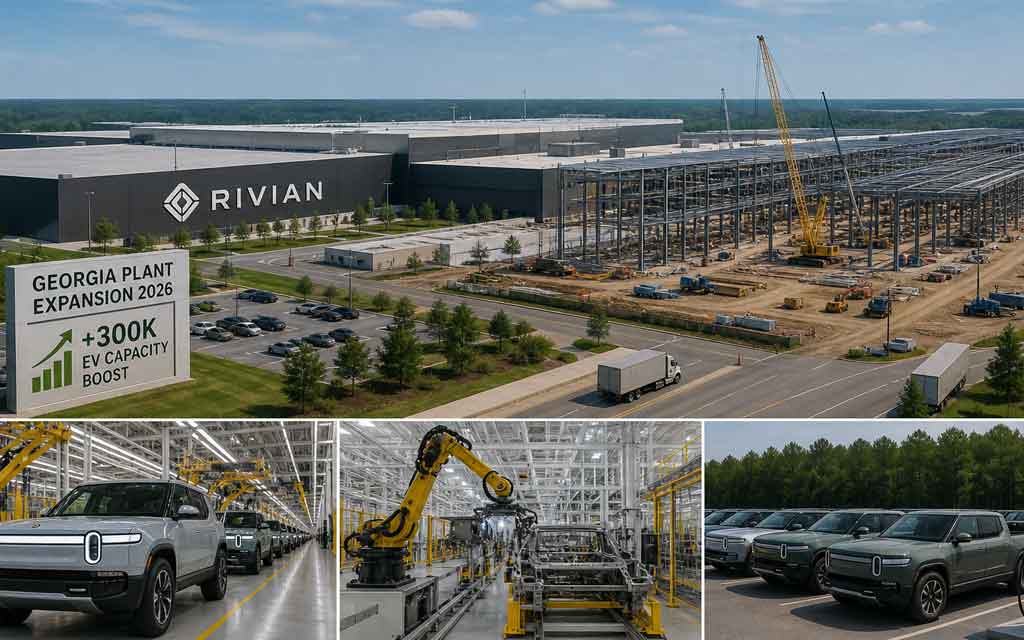
On April 30, 2026, Rivian made headlines with a game-changing announcement: its future manufacturing facility in Stanton Springs North, Georgia, will now have an optimized Phase 1 production capacity of 300,000 vehicles annually — a 50% increase from the original 200,000-unit plan.
This move comes alongside a revised $4.5 billion DOE loan (down from $6.6 billion) and positions Rivian to accelerate American-made EVs while lowering per-unit costs. Vertical construction begins in 2026, with vehicle production targeted for late 2028. For US buyers tired of waiting lists and foreign supply chains, this is big news.
As Ethan Brooks here at vFutureMedia, I’ve been tracking Rivian’s journey from the Illinois Normal plant to this Southeast expansion. In this deep dive, we’ll break down the details, technical implications, job creation, competition with Tesla, and how this boosts US EV infrastructure and range confidence for everyday American drivers.
Whether you’re eyeing the upcoming R2, R3, or just want to understand the future of domestic EV production, this post has you covered. Let’s explore why Rivian’s Georgia Plant Expansion 2026 is a pivotal moment for the American EV market.
What Exactly Changed with the Rivian Georgia Plant?
Rivian’s original plan for the Georgia facility (ground broken in 2025) targeted 200,000 vehicles in Phase 1. The April 30, 2026 update supercharges this to 300,000 vehicles per year in the first phase alone.
Key Updates:
- Capacity Boost: 50% increase enables economies of scale and lower vehicle prices.
- Loan Adjustment: $4.5 billion DOE financing (principal $4.006B + interest) focuses solely on optimized Phase 1. Funds drawable from early 2027.
- Timeline: Site preparation ongoing; vertical construction ramps in 2026; production starts late 2028.
- Location Advantage: Stanton Springs North (near Social Circle/Atlanta) offers logistics, skilled labor from the Southeast auto corridor, and room for future phases.
This isn’t just expansion — it’s smart optimization. By concentrating on a larger Phase 1, Rivian reduces risk while keeping flexibility for Phase 2 growth. CEO RJ Scaringe emphasized bolstering US manufacturing jobs and maintaining American tech leadership.
Internal Link: Curious about Rivian’s current lineup? Check our 2026 Rivian R1T & R1S Review.
Technical Specs and What the Georgia Plant Will Build
The Georgia facility will focus on Rivian’s midsize and compact platforms — primarily the R2 SUV and R3/R3X crossovers.
Expected Production Details (Georgia Phase 1):
- Annual Output: 300,000 vehicles once at full ramp.
- Models: R2 (5-seater midsize SUV), R3 (compact crossover), R3X (performance off-roader).
- Powertrain Options: Single, dual, or tri-motor configurations.
- Range Targets: Up to 345+ miles on select R2 variants.
- Pricing Strategy: R2 starts around $45,000–$57,990, making it far more accessible than R1 models.
This plant will also support up to 50,000 R2-based robotaxis through Rivian’s partnership with Uber, adding commercial volume.
Advanced manufacturing techniques (learned from Normal, IL) will emphasize modularity, battery integration, and quality control for American roads — from snowy Midwest winters to scorching Southern summers.
Americas-Focused Analysis: Jobs, Supply Chain, and Tesla Competition
Job Creation: The project is expected to create thousands of direct manufacturing jobs plus thousands more in construction and supply chain roles. By 2030, estimates point to 7,500+ long-term positions in Georgia.
This is a boon for the Southeast US economy, bringing high-tech EV jobs to a region traditionally strong in traditional auto manufacturing. Local suppliers for batteries, wiring, and components will thrive, strengthening domestic supply chains and reducing reliance on Asia.
Vs. Tesla: While Tesla dominates with Gigafactories in Texas, Nevada, and beyond, Rivian’s Georgia move diversifies US EV production. Tesla focuses on volume (Model Y, Cybertruck), but Rivian targets adventure-oriented buyers with superior off-road capability and software. The R2/R3 will compete directly in the more affordable segment where Tesla’s next-gen models are still evolving.
Policy Context: This aligns perfectly with US incentives. Federal EV tax credits (up to $7,500) remain key for buyers, and domestic manufacturing strengthens eligibility. Georgia’s pro-business environment and potential state incentives add further tailwinds.
Supply Chain Resilience: Expanding in Georgia hedges against tariffs, geopolitical risks, and logistics disruptions — a smart move in 2026’s uncertain global trade landscape.
Solving Range Anxiety and Charging Infrastructure
One of the biggest barriers for American EV adoption is charging, especially on long road trips across the vast US.
Rivian’s Charging Ecosystem in 2026:
- Native NACS ports on newer models for seamless Tesla Supercharger access.
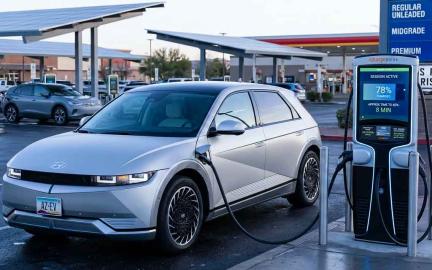
- Expanding Rivian Adventure Network (now over 960 chargers across 145+ sites).
- Adapters for CCS and broader network compatibility.
- Home charging incentives: Federal 30% tax credit on installation.
The Georgia plant’s volume will accelerate battery tech improvements and software updates for faster charging and better efficiency. More US-made Rivians mean more data for optimizing routes via the Rivian app — critical for cross-country hauls from California to New York or Florida family vacations.
For fleet operators and robotaxis, the higher production capacity ensures reliable supply, reducing downtime and building confidence in EV infrastructure nationwide.
Pro Tip: Pair your future Georgia-built R2 with a Level 2 home charger for ~$0.03–0.05 per mile operating costs — far below gasoline trucks.
Future Outlook: R2, R3, and the Broader US EV Market Through 2028+
Short-Term (2026–2027): R2 production ramps at Normal, IL, with first deliveries already underway or imminent. Georgia construction builds momentum.
2028 Milestone: Georgia comes online, flooding the market with affordable, American-made EVs. This could help Rivian achieve positive cash flow and margin improvements through scale.
Longer Term: Potential for full Phase 2 expansion, more models, and even greater robotaxi/commercial output. Rivian aims to capture mainstream buyers who want capability without luxury pricing.
Market Impact: Increased competition will push Tesla, Ford, GM, and legacy automakers to accelerate affordable EV offerings. Overall US EV adoption gets a boost, supporting national goals for energy independence and reduced emissions.
Challenges remain — battery costs, raw materials, grid upgrades — but Rivian’s optimized approach shows mature strategic thinking.
Conclusion: Why This Matters for American Drivers
Rivian’s Georgia Plant Expansion 2026 isn’t just factory news — it’s a statement about the future of American innovation, jobs, and mobility. With 300,000 annual capacity, domestic production of exciting R2/R3 models, and stronger charging networks, everyday Americans gain more reasons to go electric.
If you’re considering an EV in 2026 or beyond, keep Rivian on your radar. The adventure-ready trucks and SUVs built right here in the US will offer compelling value, performance, and peace of mind.
What are your thoughts on Rivian’s Georgia move? Will you wait for an R2 from the new plant? Drop a comment below or sign up for vFutureMedia’s weekly EV newsletter for more insights.
Ready to explore more? Browse our latest EV Buying Guide 2026 or Tesla vs Rivian Comparison.
Author Bio Ethan Brooks is a senior technology and mobility writer at vFutureMedia.com with over 8 years covering EVs, AI, and future gadgets. Passionate about American innovation and sustainable transport, Ethan delivers in-depth, buyer-focused analysis for US audiences.



Leave a Comment