
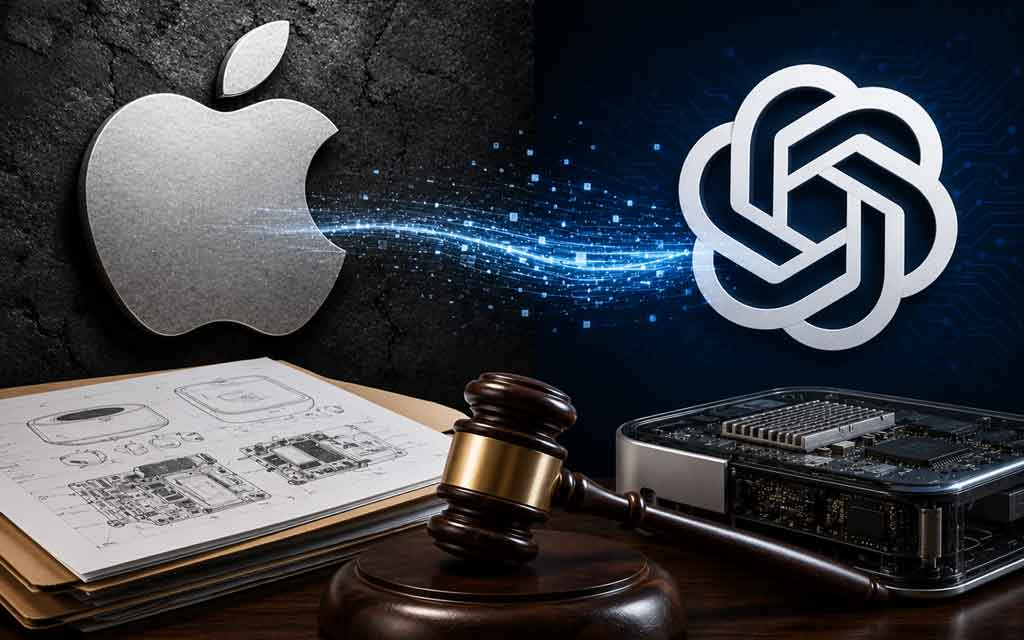
In a major escalation of tensions between two of the world’s most influential technology companies, Apple has filed a lawsuit against OpenAI, accusing the artificial intelligence leader of unlawfully stealing confidential trade secrets.
The suit, filed Friday, July 10, 2026, in the U.S. District Court for the Northern District of California, claims OpenAI engaged in a systematic, coordinated campaign to acquire Apple’s proprietary information about upcoming products, designs, manufacturing processes, and supply chains. Apple alleges the goal was to accelerate OpenAI’s own consumer hardware ambitions.
Apple’s complaint states that the misconduct occurred “at every level, from members of its Technical Staff to its Chief Hardware Officer, and in coordination with business partners.”
What Apple Alleges
According to the lawsuit, OpenAI:
- Poached Apple employees and encouraged them to share confidential materials during the recruitment process.
- Coached departing Apple staff on how to evade the company’s security protocols when leaving.
- Asked job candidates from Apple to bring device components, drawings, prototypes, and other sensitive materials to interviews.
- Benefited from former Apple employees who allegedly took or continued accessing confidential information after joining OpenAI.
Two individuals are named as defendants alongside OpenAI entities:
- Tang Tan (also referred to as Tang Yew Tan), OpenAI’s Chief Hardware Officer and a former Apple executive.
- Chang Liu, a member of OpenAI’s technical staff and former Apple employee.
Specific incidents cited include claims that Liu accessed Apple network storage after leaving the company (with internal messages allegedly joking about the access) and that Tan emailed himself supplier-related information before departing Apple.
Apple asserts it lacks full visibility into how OpenAI has used the information but believes the stolen secrets have been leveraged to develop competing AI hardware devices.
The company is seeking the return of its trade secrets, an injunction preventing further use, and monetary damages.
Context: From Partners to Adversaries
The lawsuit marks a dramatic rupture. Apple and OpenAI previously collaborated closely, including integrations that brought ChatGPT capabilities into Apple’s ecosystem (such as Apple Intelligence features). That partnership has now given way to open legal conflict as OpenAI aggressively expands into consumer hardware.
OpenAI has hired hundreds of former Apple engineers (reports cite over 400 in some accounts) as it builds out its hardware team. The company has been developing devices designed to run advanced AI models natively, aiming to compete in the personal AI hardware space long dominated by Apple’s iPhone, AirPods, Mac, and Vision Pro ecosystems.
Apple has long been extremely protective of its hardware designs, manufacturing know-how, and supply-chain strategies — viewing them as core competitive advantages.
Why This Lawsuit Matters
This case is significant for several reasons:
1. High-Stakes AI Hardware Race OpenAI’s push into physical devices represents a major strategic shift. Apple’s lawsuit aims to protect its decades of accumulated expertise in industrial design, manufacturing scale, and component supply chains.
2. Talent Wars and Trade Secret Risks The suit highlights growing tensions around employee mobility in the AI sector. As talent flows rapidly between companies, the line between legitimate knowledge transfer and unlawful appropriation of trade secrets is being tested in court.
3. Precedent for Tech Giants A win for Apple could set stronger boundaries for how AI companies recruit and onboarding practices. A loss or settlement could embolden more aggressive talent and information acquisition strategies.
4. Impact on Innovation and Competition The case arrives as multiple companies race to build AI-native hardware. Legal battles like this can slow development timelines, increase costs, and shape the competitive landscape for years.
OpenAI’s Position
As of the latest reports, OpenAI has not issued a detailed public response beyond general denials of interest in misappropriating trade secrets. The company has previously emphasized its focus on innovation and building new products. Legal proceedings will determine the strength of Apple’s claims through discovery and potential trial.
Potential Outcomes and Industry Fallout
Possible paths forward include:
- Settlement (common in high-profile tech IP cases)
- Preliminary injunction restricting OpenAI’s hardware work
- Lengthy discovery process revealing more details about both companies’ practices
- Broader scrutiny of hiring practices across Silicon Valley AI labs
The lawsuit is also likely to increase caution among other companies hiring from Apple and to intensify compliance and offboarding procedures industry-wide.
Broader Implications for AI and Tech
This dispute underscores a larger reality of the current AI boom: as companies race to combine powerful models with physical devices, traditional intellectual property and trade secret protections are colliding with the high-velocity talent market of frontier AI labs.
For Apple, the case is about defending its hardware fortress. For OpenAI, it is about whether it can build a hardware business without being constrained by claims of improper knowledge transfer. For the rest of the industry, it is a high-profile reminder that the talent wars come with serious legal risks.
Frequently Asked Questions
What is Apple accusing OpenAI of? Apple alleges that OpenAI orchestrated a coordinated effort to steal trade secrets related to product designs, manufacturing processes, and supply chains in order to develop its own consumer AI hardware.
Who are the individual defendants? OpenAI’s Chief Hardware Officer Tang Tan and technical staff member Chang Liu, both former Apple employees.
When and where was the lawsuit filed? Friday, July 10, 2026, in the U.S. District Court for the Northern District of California.
Did Apple and OpenAI used to be partners? Yes. The companies previously collaborated on integrating ChatGPT features into Apple’s products and services.
What is OpenAI trying to build? Consumer hardware devices designed to run advanced AI models, positioning the company as a competitor in the personal computing and AI device market.
What remedies is Apple seeking? Return of its trade secrets, an injunction against further use of the information, and damages.
Bottom Line Apple’s lawsuit against OpenAI is one of the most consequential legal battles in the AI industry to date. By accusing OpenAI of systematically stealing hardware-related trade secrets “at every level,” Apple is drawing a hard line against what it sees as improper acquisition of its most closely guarded competitive advantages.
As the case proceeds, it will test the boundaries of employee mobility, trade secret law, and the aggressive growth strategies of frontier AI companies. The outcome could influence how the entire industry approaches talent hiring and hardware development for years to come.
For ongoing coverage of this lawsuit and the broader AI hardware race, stay tuned to vfuturemedia.com.
Tags: Apple sues OpenAI, OpenAI trade secrets, Apple OpenAI lawsuit, AI hardware competition, Tang Tan, Chang Liu




Leave a Comment